
The Fountain of Youth: Functional Movement

We Are Moving Less Than We Realise
Lately, I keep coming back to the same thought, that we are seriously not moving enough!
Modern life has quietly removed movement from almost everything we do. We sit at desks, in cars, on couches, behind screens. Even resting more happens after long hours of stillness.
What Everyday Movement Used to Look Like
When I think about what it really means to live well in a body, not just look well, but feel capable, I don’t think about supplements or fitness trackers first. I think about my great grandmother.
She was a Scottish farming woman. Tough. Practical. No fuss.
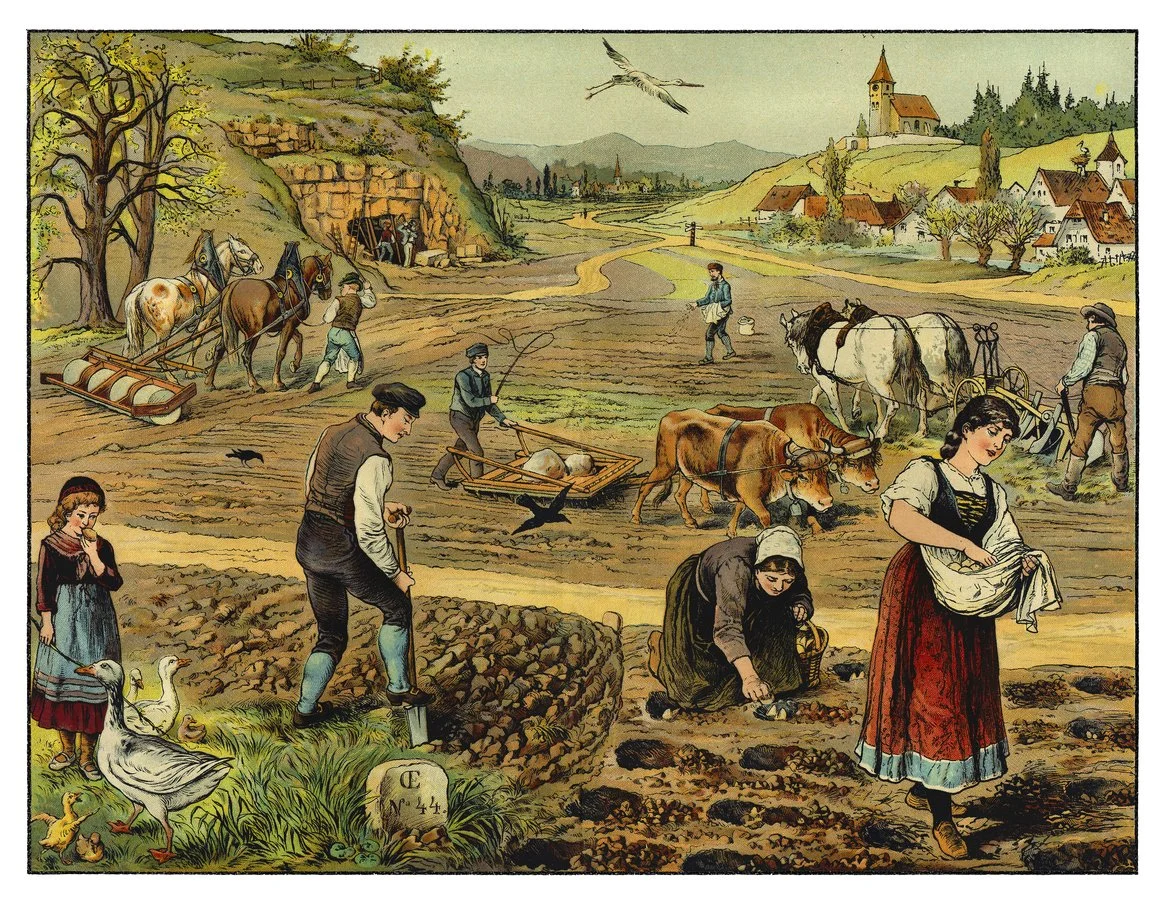
She worked right up until the end of her life, quite literally. She died at an old age in a paddock in Scotland, picking potatoes, boots still on.
She didn’t carry excess weight or have brittle bones.
She didn’t fall and fracture hips.
She didn’t fear movement.
She carried grandchildren on her hip. She squatted, bent, lifted, walked uneven ground and worked with her hands every single day of her life. Not as “exercise”, but because that was simply how life was lived.
She never needed to step foot in a gym.
She never counted steps.
She never tracked her calories and drank protein powder.
She didn’t need to, because her body was used on the daily, under natural load, in varied ways, for her entire lifetime.
This is something most of us have lost.
When Movement Became Optional
Somewhere along the way, movement became something we had to schedule instead of something built into the rhythm of the day.
Today, many adults spend 9-10 hours a day being sedentary. Stuck in prolonged stillness.
Just one or two generations ago, daily life looked very different. People walked to school, to work and to shops. Household tasks required lifting, carrying, scrubbing, sweeping and gardening. Movement wasn’t optional it was part of getting through the day, and no…I don’t want to let go of my robot vacuum cleaner, but having it might not be prolonging my health!
Today, the average adult accumulates around 3,000- 4,000 steps per day.
In many traditional and less industrialised cultures, people naturally clock 12,000-18,000 steps a day, simply through their daily life, without ever thinking about intentional “exercise”.
This is important…Why? Because research consistently shows that increasing your daily steps, even modestly is linked to living longer and staying healthier.
But what I want to rant about here isn’t just steps.
It’s about how often your body is asked to do what it was designed to do: Functional Movement.
Everyday, real world movement: walking, lifting, carrying, bending, reaching and getting up and down, that supports strength, balance and confidence in daily life.

Living This in Real Life
My partner and I have tried, imperfectly, to recreate some of this way of living for ourselves.
We live on a rural property. We care for and maintain horses, paddocks, gardens, fences and water systems. The kind of work that doesn’t care how tired you are or what time you went to bed.
Horses still need feeding.
Water troughs still need checking.
Fences still break.
Grass still grows.
And believe me, there are many mornings we would happily sleep in.
But nature and duty call. Every day.
So we move constantly, and often compulsorily because life requires it. We walk uneven ground. We lift awkward loads. We squat, bend, pull, carry, push and shovel.
It’s not a fitness program.
It’s not aesthetic.
It’s not curated.
It’s just life and its compulsory.
And what I’ve noticed personally and clinically is this: when movement is built into the day rather than added on as another task, the body and mind respond differently.
Strength holds.
Balance holds.
Confidence in what your body can do holds.
What we’ve lost is necessity to move.

How Simple Movement Changes the Body
Movement affects the body at every level, muscular, skeletal, metabolic and neurological.
Regular movement helps:
Maintain muscle and strength
Protect bone density
Support joints, tendons and connective tissue
Improve balance and coordination
Enhance insulin sensitivity
Reduce systemic inflammation
Movement also plays a critical role in brain health. It increases levels of BDNF (Brain Derived Neurotrophic Factor), a molecule that supports neuroplasticity (the brain’s ability to grow, repair, adapt, learn and form new connections).
Research shows:
Aerobic movement supports memory centers in the brain
Resistance training improves focus and executive function
Regular physical activity is linked to better mental clarity and mood
These changes begin quietly in mid adulthood, long before most people notice them.
What Happens When Movement Drops Away
Muscle strength declines by around 3-5% per year after age 40 if it’s not challenged. Collagen production gradually reduces from our early 30s, affecting joints, tendons and connective tissue. Balance systems can begin to weaken within just a couple of weeks of reduced movement.
This is why people often feel like their body “suddenly” isn’t cooperating anymore. It was gradual.
And a reflection of how often the body was being used.

Why Exercise Feels Hard to Start
One of the biggest barriers I see to movement is not motivation, it’s usually perception.
Many people believe movement needs to be:
Structured
Intense
Scheduled
Time consuming
So if they can’t get to the gym, fit in a class or follow a program perfectly, movement quietly drops away.
The body doesn’t respond to labels. It responds to frequency. You are better to do something small and frequently than not at all.

How to Bring Movement Back Into Everyday Life
Natural and Functional Daily Movement can be recreated in many forms, even within busy, urban lives.
The shift is subtle. Less about adding another task, more about letting movement creep back into everyday moments.
That might look like:
Walking for transport where possible
Breaking up sitting every 30-60 minutes
Carrying groceries and bags
Using stairs deliberately
Getting up and down off the floor daily
Gardening, even in pots
Cleaning with effort
Choosing uneven surfaces when walking
Strength training a few times per week
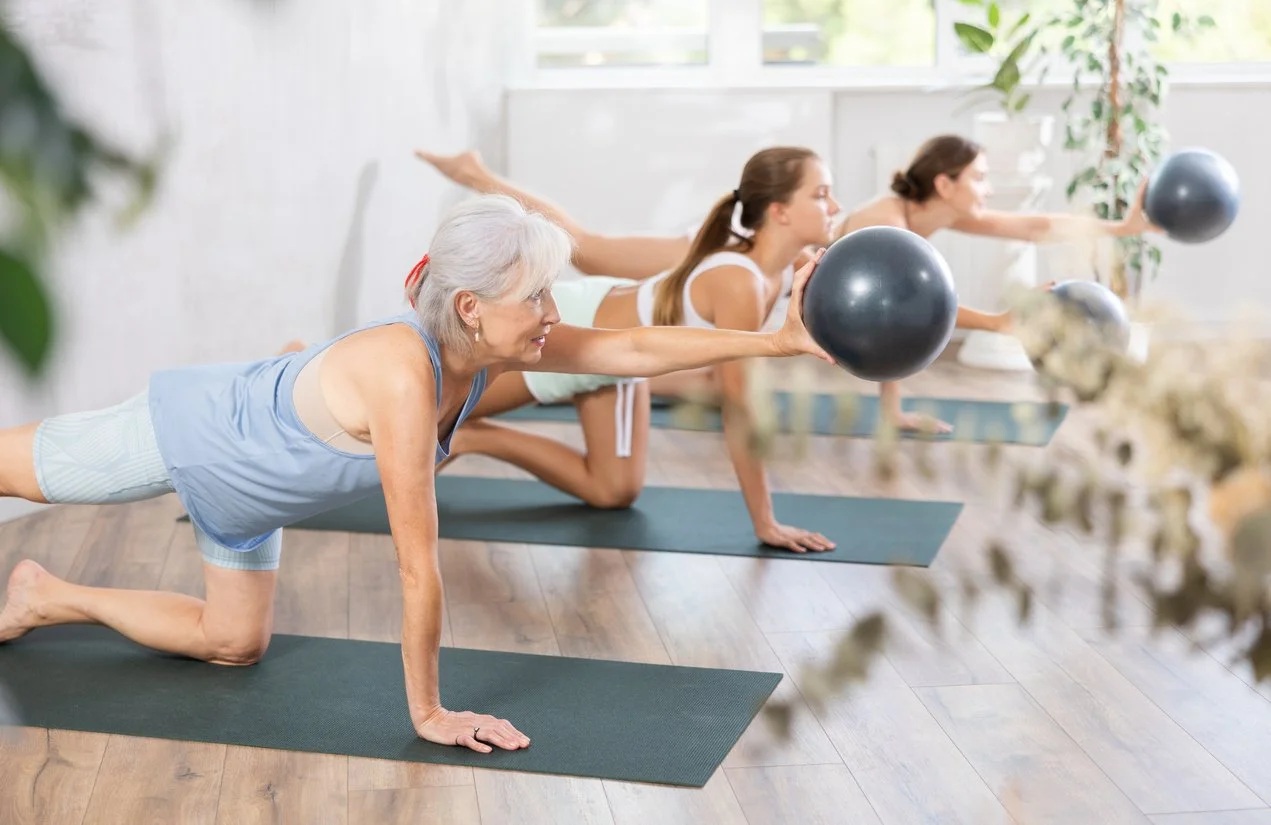
Practices like Pilates, yoga or Tai Chi to support balance and joint health
Movement doesn’t need to be extreme.
It just needs to show up often.

A Closing Thought
What this really comes back to is how you feel in your body day to day.
Feeling capable.
Feeling steady.
Feeling like your body can keep up with the life you’re asking it to live.
Functional Movement is one of the simplest ways to maintain that sense of trust, physically and mentally.
When movement becomes part of everyday life, the body responds.
Take small, regular reasons to keep using your body.
Your body adapts to how it’s used. Please…Use it often.
Kylie Cloney. BHSc. Complementary Medicine
References
Low-intensity physical activity and reduced frailty: PubMed ID 31525171
Daily step count and longevity outcomes: PubMed ID 32259114
Muscle loss with inactivity and bed rest: PubMed ID 19528915
Age-related collagen decline: PubMed ID 23467437
Resistance training and bone density: PubMed ID 28934791
Resistance training and cognitive function: PubMed ID 27857252
Aerobic exercise and hippocampal volume: PubMed ID 21282661
Physical activity and dementia risk reduction: PubMed ID 28448505
Exercise and white matter integrity: PubMed ID 25629872
Medical Disclaimer:
This article is for general information only. Please refer to our medical disclaimer for full details.